

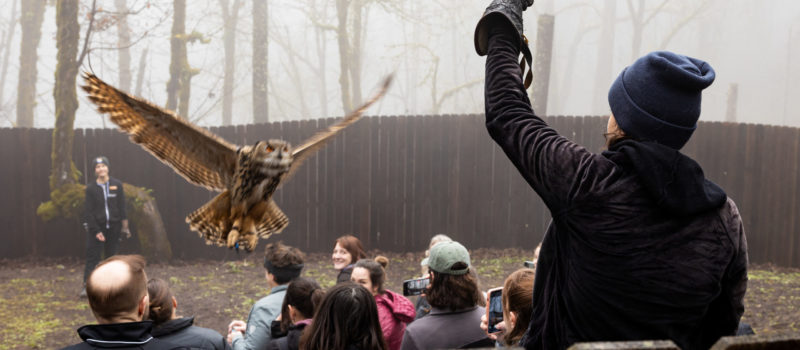
Avian Training at Cascades Raptor Center
In 20__, Cascades Raptor Center was one of the first American bird facilities to adopt choice-based positive reinforcement training, a technique which was developed in 19___ and has since become the gold standard of animal training methods in the zookeeping field.
What is choice-based training?
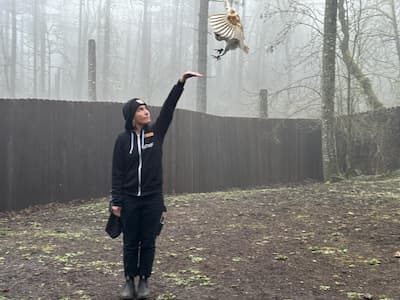
Simply put, this means that we never force a bird to do anything (except in case of emergency). Everything you see our resident raptors doing on your visit – from flying in programs to sitting quietly while guests walk past – is the result of this approach. It doesn’t happen on its own! We have to teach the bird these things are an option, and they have to say yes to that option. If the bird says no, we respect their answer.
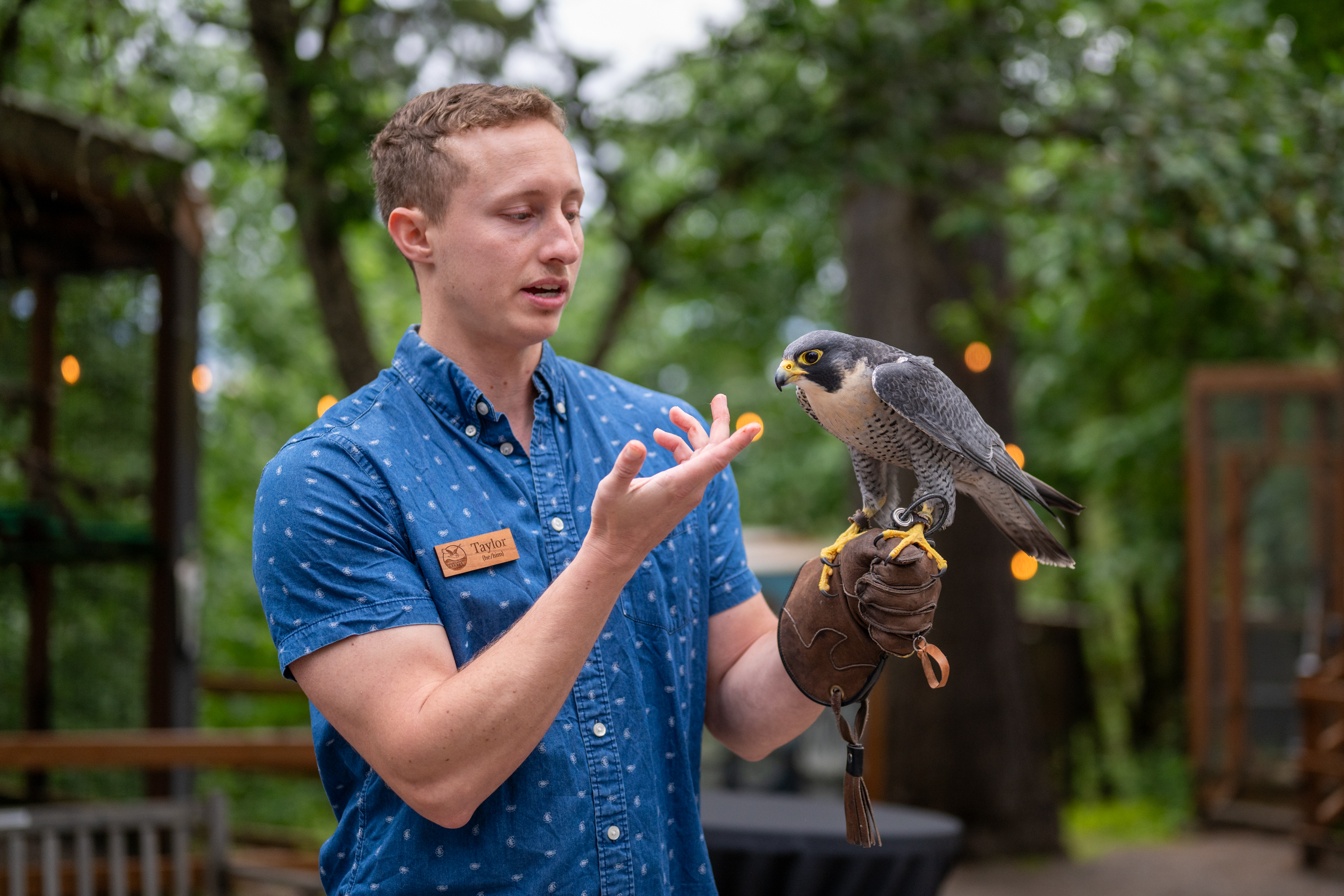
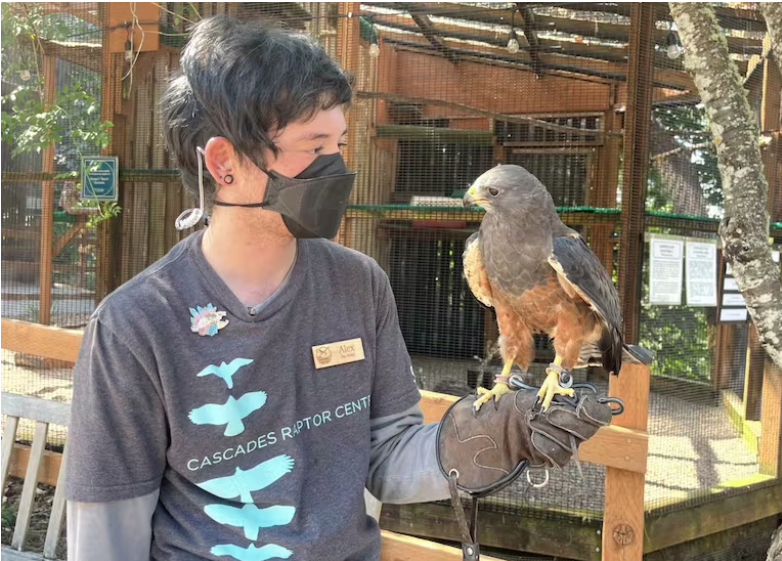
Our training work is built around teaching our birds to make good choices, i.e. choices that are beneficial for both them and us. This might mean coming to land on a trainer’s glove, sitting quietly while we trim their talons, or voluntarily stepping into a carrier. Studies have shown that all animals, including humans, are happier and more cooperative when they have control over what happens to them.
What is positive reinforcement?
Positive reinforcement is what it sounds like: rewarding (reinforcing) behaviors we want, and ignoring the ones we don’t. This is far more effective and humane than punishing the animal for undesirable behavior. We never use fear or intimidation to make a bird do what we need. This method is very effective for all animals, including humans!
Why is this approach important?
For many decades, animals living in human care at zoos and other facilities were treated as passive objects and had no say in anything that happened to them. They were placed in crates by force, frequently restrained, and pulled out of their enclosures whenever the keepers wanted them to come out.
Choice-based work gives control back to the animal and treats them as a partner, not a prop or possession. As public educators teaching people to respect wild animals, we have a duty to show our resident raptors the same respect and care. This philosophy empowers them to be equal participants in the work we do.
I work at an animal facility! How do I start using this approach?
We’re so glad you asked. This takes time and practice, but is absolutely worth it.
International Association of Avian Trainers and Educators.